New EIT team to pioneer plant science innovation
The Plant Biology Institute at the Ellison Institute of Technology Oxford brings together world-leading expertise in plant science, computational biology and biotechnology to address key challenges facing global food systems.
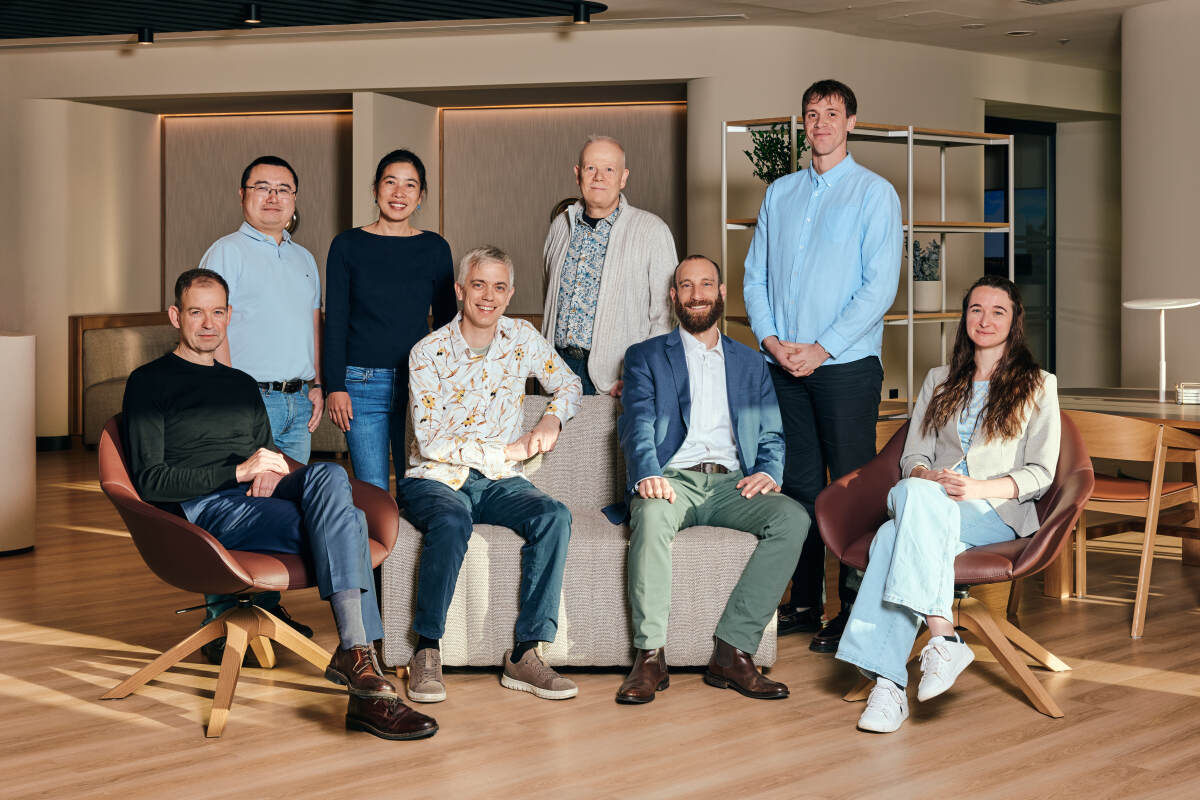
The Plant Biology Institute (PBI) at the Ellison Institute of Technology Oxford (EIT Oxford) today announced key scientific leadership appointments to drive pioneering research in plant biology, sustainable agriculture and plant-based production systems under the leadership of Executive Director Professor Steve Kelly.
PBI brings together world-leading expertise in plant science, computational biology and biotechnology to address some of the most pressing challenges facing global food systems. Combining advances in crop engineering, AI and automation and a clear commercial mindset, the institute aims to develop a new vision of high-yielding and resilient agriculture that feeds our growing world while protecting its resources.
Among the new appointments is Professor Lee Sweetlove, who is developing technologies in the emerging field of plant cell culture that will allow us to “brew” valuable plant-based therapeutics and food ingredients without growing whole plants in the field. His expanding team includes Dr. Shanshan Wang, who is improving the efficiency and productivity of plant cells in bioreactor vessels, Professor Björn Hamberger, a world expert in the biosynthesis of high-value plant-based natural products and Dr. Yuan Li, an experienced operator and entrepreneur in the plant cell culture ecosystem.
Also joining the institute is Dr. Jacques Bouvier, who is leading PBI’s effort to free farmers from their dependence on environmentally-damaging chemical fertilisers. His team is exploring multiple strategies to enable plants to harvest their most important nutrient, nitrogen, directly from the atmosphere. Such an engineered nitrogen fixation trait would not only reduce carbon emissions and environmental harm associated with chemical fertiliser use and manufacturing, but could also boost agricultural productivity in low income countries where fertilisers are less widely available.

Professor Kelly sees unique opportunity to solve generational agricultural challenges in our current technological moment:
"We are excited to leverage recent developments in AI to help deliver the best seeds to farmers, develop new crop varieties that produce more food with fewer inputs, and reduce the environmental impact of agriculture. We want to shorten the timeline from concept to farmers’ fields and to collaborate with world-leading plant science research centres to bring the world’s most impactful innovations to the people that need them."
In support of this strategy, PBI has also recruited a commercially-experienced technology development team to accelerate foundational discoveries to real-world impact. This team is led by Dr. Matt DiLeo, who has delivered multiple new biotechnologies to field trials, including microbial seed treatments, molecularly-farmed food ingredients and gene-edited bananas. PBI’s computational platform is led by Dr. Helena Saunders, who has built bioinformatic tools and platforms in both startup and global enterprise environments. At PBI, Dr. Saunders is building a connected data ecosystem that will support lab-in-the-loop automation and enable rapid iteration and testing of AI-generated designs. Dr. Tanveer Khan joins PBI with more than twenty years of experience building commercial plant bioengineering and gene editing teams in the UK, Brazil, Singapore and the USA. Dr. Khan is currently establishing state-of-the-art plant transformation techniques while collaborating with colleagues at EIT’s AI & Robotics Institute to automate and scale this core capability.
Professor Kelly adds "We hope to improve the productivity of every farm on earth. We also hope to develop the crop plants of the future, enabling farmers to grow more with less - helping humanity sustain future populations with less land and reduced impact on the natural world."