Generative Biology Institute announces research group leaders
Recruitment of a founding scientific team will establish GBI at the Ellison Institute of Technology, Oxford as a global centre of excellence in generative biology.
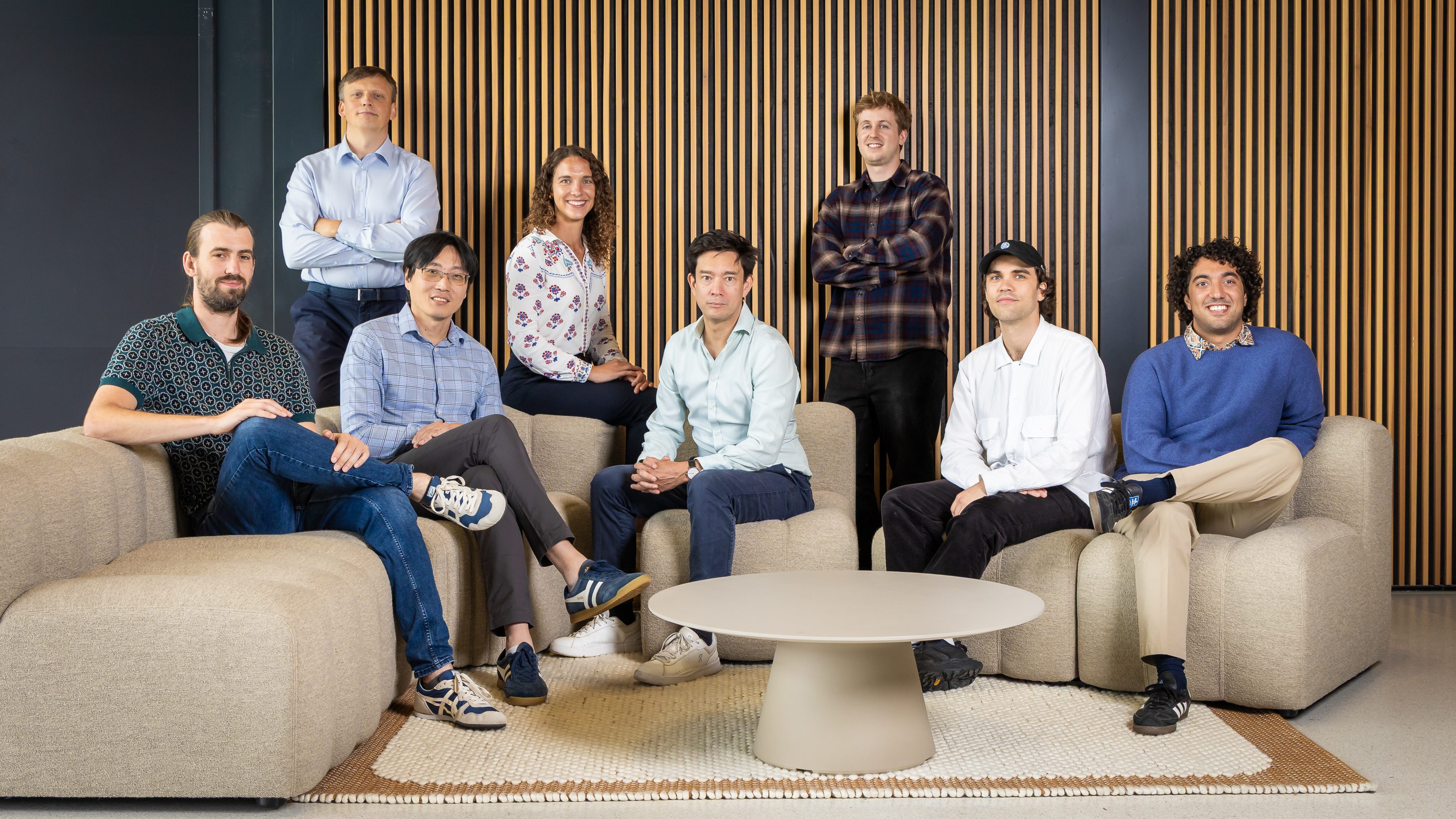
The Generative Biology Institute (GBI) at the Ellison Institute of Technology, Oxford (EIT Oxford) today shared its first wave of Principal Investigators who have been brought together under the leadership of Founding Director, Professor Jason Chin.
GBI aims to be a global centre of excellence for generative biology — an emerging area of science that harnesses the power of biology to perform new and useful functions. The field could ultimately enable the design of novel cells, proteins and other biological systems, much as engineers design machines and computer networks.
The field has the potential to change the way society approaches some of its most pressing challenges. By learning to write DNA sequences in the natural language of biology and designing new living systems rather than simply observing or modifying those that already exist, scientists could develop fresh approaches to tackling human health and disease, the discovery and manufacture of medicines, sustainable food production, climate change and environmental restoration, and the production of new materials and chemicals with dramatically lower environmental impact - all global issues that EIT’s focus areas seek to address.
Among the new hires is Professor Chang Liu, most recently at the University of California, Irvine, who is internationally recognised for his work in synthetic biology, genetic engineering and directed evolution.
Professor Chang Liu said:
“I am delighted to welcome the new GBI team to Oxford. We have assembled scientists whose pioneering contributions are defining the frontiers of generative biology for the benefit of humanity. By nucleating extraordinary talent across this emerging field, we aim to further accelerate progress on the design and construction of biological systems constrained only by physical laws and our collective imagination.”
Also joining the team is leading computational biologist and genome engineer Dr Leopold Parts, who has moved from the Wellcome Sanger Institute in Cambridge. Leopold’s work focuses on learning how to write novel capabilities into eukaryotic cells.
Dr Leopold Parts said:
“I am genuinely excited to start at GBI. I believe that engineering biology has enormous potential, and that GBI in the ecosystem of EIT's institutes is in the best position in the world to unlock it. We work on how to convert the understanding of how life functions into sustainable, engineered solutions for society, and our team's charge is to make useful genetic designs predictable. The quality, energy, and focus of the GBI and EIT are second to none, and the breadth of thinking around solutions, from technologies to economics, will ensure the actual impact on world scale.”
Several investigators are starting their first research groups at GBI. Dr Sam Pellock designs proteins with new functions and recently arrived from Nobel Laureate Professor David Baker’s lab at the University of Washington. Five of the new cohort were previously at the Medical Research Council Laboratory of Molecular Biology, Cambridge, including machine learning scientist Dr Kiarash Jamali, continuous evolution engineer Dr Rongzhen Tian, chromosome engineer Dr Linda van Bijsterveldt, Dr Fabian Rehm who specialises in directed evolution, and synthetic microbiologist Dr Jerome Zuercher.
The launch completes a major programme of recruitment over the past year, assembling a group of pioneers in generative biology, whose complementary expertise provides a foundation for addressing GBI’s mission.
GBI is part of EIT Oxford which brings together world-class scientists, technologists, engineers, researchers, educators and innovators collaborating across disciplines to make unprecedented impact in visionary science. The new research portfolio will provide the bedrock for GBI’s discovery pipeline over the coming years, with mechanisms in place to translate and commercialise breakthroughs to ensure they deliver beneficial impact for society.
GBI research is enabled and accelerated by state-of-the-art scientific technology hubs driven by leading technologists. These include expertise and facilities in high-performance computing, bioinformatics, mass spectrometry, sequencing, flow cytometry, lab automation and lab services. The hubs are tightly coupled to the research in GBI and will continuously develop their capabilities to support its mission.
Professor Jason Chin, Director of the Generative Biology Institute, said:
“I am delighted to welcome the new GBI team to Oxford. We have assembled scientists whose pioneering contributions are defining the frontiers of generative biology. By nucleating extraordinary talent across this emerging field, we aim to further accelerate progress on the design and construction of biological systems constrained only by physical laws and our collective imagination.”
For the UK, the emergence of generative biology also presents an opportunity to establish leadership in a field likely to have profound scientific, economic and societal consequences. GBI aims to bring together fundamental research, advanced technologies and an entrepreneurial culture in Oxford, while creating collaborations with researchers and institutions internationally.
Professor Chin added:
“The challenges facing humanity are increasingly challenges of biology. We need new medicines for diseases that remain difficult to treat, new ways of producing food and materials sustainably, and new biological solutions to environmental problems. Biology has evolved extraordinary capabilities over billions of years. Generative biology gives us the opportunity to design biological systems to address the challenges facing humanity. That is the opportunity we want GBI to seize.”