Professor Jason Chin to receive prestigious Heinrich Wieland Prize for his work in Generative Biology
The prestigious international prize from Boehringer Ingelheim Stiftung recognises outstanding research on biologically active molecules and systems.
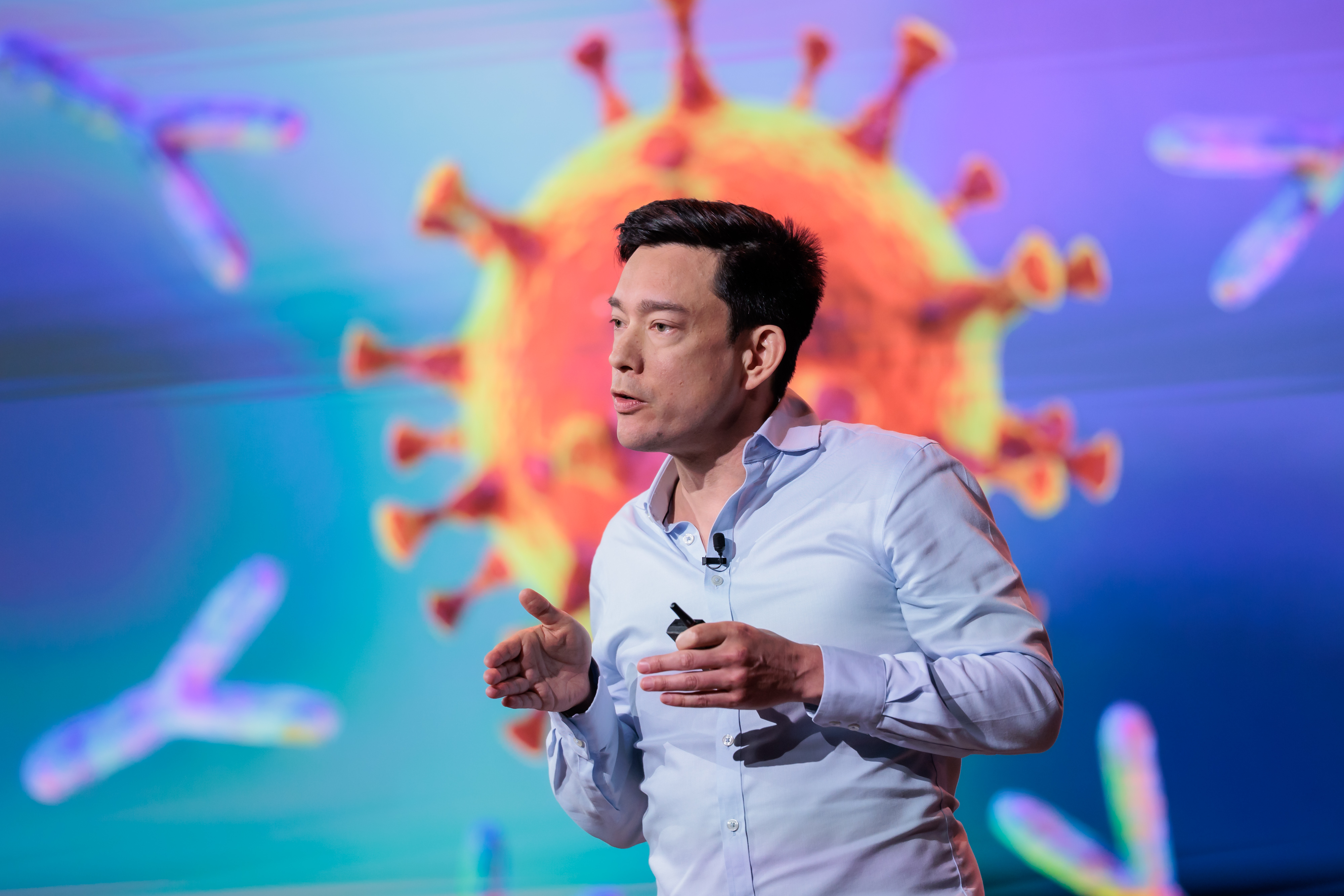
We are delighted to announce that Professor Jason Chin, Executive Director of the Generative Biology Institute (GBI) at EIT has been selected to receive the 2026 Heinrich Wieland Prize from the Boehringer Ingelheim Stiftung.
He will receive the award for his pioneering contributions to synthetic biology, particularly his engineering of cells to biosynthesize unnatural proteins and polymers with properties absent in nature. The award ceremony will take place in Munich, Germany, on 5th November 2026.
Reprogramming the language of life
Every living cell reads the same genetic code — a near-universal set of instructions, conserved across billions of years of evolution, that translates DNA sequences into proteins built from the regular 20 different amino acids. Jason Chin set out to rewrite that code.
His approach rests on three landmark achievements. First, he created a bacterial strain carrying the largest and most radically altered synthetic genome ever made. By systematically recoding more than 18,000 DNA sequences, he produced an organism that uses only 61 of the 64 genetic code words (codons) found in nature — freeing up three for new purposes. In more recent work, he pushed this even further, liberating seven codons for reassignment. Second, he engineered an entirely new cellular translation machinery — orthogonal tRNAs and tRNA synthetases — capable of reading those freed-up codons and incorporating novel chemical building blocks into growing protein chains, building blocks that have never existed in natural proteins. Third, combining these two innovations, he reprogrammed cells to produce wholly new classes of molecules: proteins with non-natural chemistries, entirely artificial polymers, and ring-shaped molecules known as macrocycles — structures of considerable interest to drug discovery.
Jason Chin has thereby moved synthetic biology beyond merely tweaking existing cellular pathways, instead redesigning the very informational architecture of life. By reprogramming the genetic code, he has enabled living cells to produce entirely new classes of molecules that neither conventional chemistry nor natural biology can make. His approach has become the most widely used method worldwide for this purpose and has opened new ways to study how proteins are modified inside cells, control their activity using light, and track their movements with precision in living organisms.
A striking consequence of reassigning large numbers of codons is that it acts as a genetic firewall: the recoded synthetic organisms cannot exchange genetic information with natural life, because their genetic codes have become mutually incompatible. This addresses a key biosafety concern in synthetic biology and creates cells that are intrinsically resistant to viral infections.
Jason Chin was also the first to extend genetic code expansion beyond bacteria, bringing it to mammalian cells in culture and even to whole living organisms. This opened the door to studying and controlling biological processes in unprecedented ways. In one of his most recent studies, he removed a chromosome from a human cell, transferred it to a mouse embryonic stem cell where he chemically rewrote it and reinstalled it into a recipient human cell. This is a key step toward building synthetic human chromosomes with far-reaching implications for understanding how genomes work and for treating genetic diseases.
Franz-Ulrich Hartl, Chair of the scientific Board of Trustees of the Heinrich Wieland Prize, commented:
"Jason has done something remarkable: he has shown that the genetic code, long considered fixed and near-universal, can be systematically rewritten. He progressed it from single unnatural amino acid incorporation in cells to the creation of a first living organism with a recoded genome, and finally towards synthetic human chromosomes, a trajectory that spans fundamental chemistry and synthetic biology with far-reaching potential for translational medicine.”
Christoph Boehringer, Chair of the Executive Committee of the Boehringer Ingelheim Stiftung, adds: "What began as the bold question if the rules of life can be rewritten has become a platform for creating chemical reactions and molecules that nature never imagined. This is exactly the kind of foundational research the Heinrich Wieland Prize exists to celebrate."
Reflecting on his work, Jason said:
"Synthetic biology often asks what we can borrow from nature. We are asking something different: what can we build if the only limits are physical laws and our imagination?"
Heinrich Wieland Prize
This international award honours outstanding research on biologically active molecules and systems in the fields of chemistry, biochemistry, and physiology as well as their clinical importance. The prize is named after Nobel Laureate Heinrich Otto Wieland (1877–1957) and has been awarded annually since 1964. It is among the most prestigious awards for fundamental research in the life sciences in Europe.
Every year, the Boehringer Ingelheim Stiftung publishes an open call for nominations. Scientists worldwide may nominate a colleague; self-nominations are not permitted. A scientific Board of Trustees consisting of nine internationally renowned scientists selects the laureate. The trustees perform their duties on an honorary basis.
The long list of laureates includes five subsequent Nobel laureates: Michael Brown, Joseph Goldstein, Bengt Samuelsson, James Rothman, and Carolyn Bertozzi.
Boehringer Ingelheim Stiftung
The Boehringer Ingelheim Stiftung is an independent, non-profit foundation committed to promoting the medical, biological, chemical, and pharmaceutical sciences. It was established in 1977 by Hubertus Liebrecht (1931–1991), a member of the shareholder family of the Boehringer Ingelheim company. Through its funding programmes CoMove, Exploration Grants, Plus 3, and Rise up!, the foundation supports excellent scientists during critical stages of their careers. It also endows awards for junior scientists in Germany. Additionally, it funds institutional projects in the life sciences, such as the AITHYRA Institute in Vienna and a new research department (BioAI) at the Center for Systems Biology in Dresden, which both combine biomedicine with AI. Other supported institutions include the Institute of Molecular Biology (IMB) in Mainz and the European Molecular Biology Laboratory (EMBL) in Heidelberg.